terça-feira, 16 de junho de 2020

Secrets of the amazing SR-71 Blackbird

On May 1, 1960, an American reconnaissance aircraft Lockheed U-2, on a spy mission by the CIA - Central Intelligence Agency, in the airspace of the Soviet Union, was shot down, causing one of the most famous Cold War incidents. Its pilot, Francis Gary Powers, survived and was arrested as a spy, later being released in exchange for a Soviet spy, imprisoned in the United States.


The May 1960 incident interrupted reconnaissance flights over Soviet territory, considered vital by American strategists. Until then, Americans believed that U-2s were not subject to interception by Soviet fighters, as they flew at about 70,000 feet, well above their service roof.


But Powers' U-2 was shot down by a surface-to-air missile above Sverdlovsk (now Yekaterinburg). It was evident that the high altitude was no longer sufficient protection.


American strategists immediately felt the need for an aircraft capable of flying as high as the U-2, but with at least twice the speed. The U-2 was subsonic, in fact a glider-like aircraft driven by a single turbojet engine without post combustion.
The answer to their concerns came from the design of a reconnaissance aircraft designed by Lockheed's top-secret laboratory "Skunk Works", headed by brilliant designer Clarence "Kelly" Johnson. Intended for the CIA, this aircraft, the A-12, was specifically designed to replace the efficient but slow U-2, also designed by "Skunk Works".


The A-12 surpassed CIA expectations, as it could fly at an incredible speed of Mach 3.35, or more, at about 3,500 km / h at 75,000 feet. Its assumed service ceiling was 85,000 feet, but there is news, still kept secret, about operations that may have reached 100,000 feet. In short, it was simply faster and could fly higher than all the surface-to-air missiles of the day. It also had the additional advantage of being almost invisible to radars, due to its unusual shape and the use of radio wave absorbing materials, and it can be considered justly as the first "stealth" airplane in history. Initially developed at the Lockheed plant in Burbank, just outside Los Angeles, the A-12, YF-12 and SR-71 programs were transferred to a remote test base located in Groom Lake, Nevada, a dry salt lake, a base that it would become world famous for its Area 51 designation. The Edwards base, the Air Force's main test base, was too close to Los Angeles and populated places to maintain the necessary secrecy required by the Department of Defense. Groon Lake is close to the Nevada Desert Nuclear Test Area, and is much more isolated than Edwards, an ideal location for testing these revolutionary machines, without attracting the attention of onlookers and spies.


segunda-feira, 15 de junho de 2020

McDonnell Douglas F-15 Eagle


Velocidade máxima: 3.017 km/h
Autonomia de voo: 4.815 km
Comprimento: 19 m
Tipo de motor: Pratt & Whitney F100
Custo unitário: USD 28.000.000–30.000.000 (1998)
Fabricantes: McDonnell Douglas, Boeing Defense, Space & Security

segunda-feira, 10 de julho de 2017

Sukhoi Su-47


Sukhoi Su-47, formerly known as S-37 berkut, is a fighter, having in flight commands the electric cable control system, fly-by-wire.

Sukhoi Su-47
  It's hard not to recognize a Su-47, even in the midst of other fighters. This is because its wings are inverted, giving it a peculiar appearance. But this is not just for the simple aesthetic issue: with these wings, it can take off and land on smaller runways, besides having much more stability and being able to perform impossible aerial maneuvers for many similar aircraft.

Sukhoi Su-47

Top speed: 2,500 km/h
Wingspan: 15 m
Length: 23 m
Cruising speed: 1,800 km/h

domingo, 2 de julho de 2017

Real and Simulated Wars

DCS MiG-21Bis (beta) - Preview: Takeoff and Navigation
Not even the sound of our engines dares to catch up with us. The exhilaration of supersonic flight and the adrenaline rush stab my flight suit into submission against the ejection seat. The "Balalaika" takes off, aching for a fight. May the top of our wings be lenient of our errors of judgement and pilotage. May the weapons under those very wings find their way to the harms ahead of us. We hold no grudges but to non-destroyed targets and the law of gravity.


Recently released, this DLC is Leatherneck's first project. Featuring a thorough study of the Cold War's iconic interceptor, this DLC is the only and best hard core simulation of the aircraft.

In this entry, a preview of the module delivered in the form of a debrief. The purpose is two-fold. As a preview, to show what is so remarkable about this module. As a debrief, to show what an interception mission feels like from the cockpit of the Mig-21Bis.


domingo, 18 de junho de 2017

F-14 Tomcat


Grumman F-14


Velocidade máxima: 2.485 km/h
Alcance de combate: 926 km
Alcance máximo: 2.960 km
Altitude de serviço: 15.200 m
Razão de subida: 229 m/s


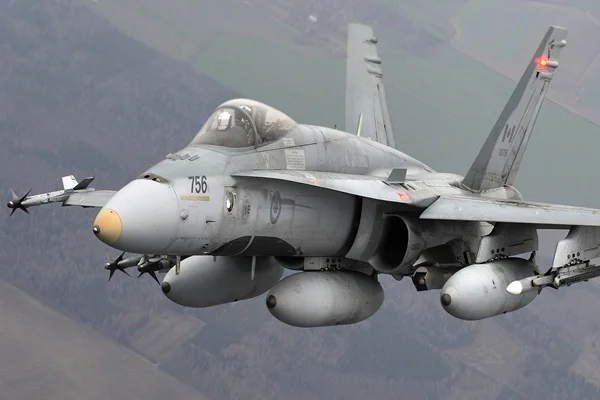
McDonnell Douglas F/A-18 Hornet

Adicionar legenda
McDonnell Douglas F/A-18 Hornet
F/A-18 Hornet é um moderno avião, do tipo caça de dominação aérea, criado pelos Estados Unidos. Pode carregar até 8.000 kg de mísseis e pode alcançar uma velocidade de 1.915 Km/h, graças ao seu motor de 97,8 KN de potência


Velocidade máxima: 1.915 km/h
Envergadura: 14 m
Custo unitário: USD 29.000.000–57.000.000 (2006)
Primeiro voo em: 18 de novembro de 1978
Tipos de motor: General Electric F404, Turbofan
Fabricantes: Boeing, Northrop Grumman Corporation, McDonnell Douglas, Boeing Defense, Space & Security

sábado, 17 de junho de 2017

Mikoyan MiG-35

Mikoyan MiG-35
O Mikoyan MiG-35 é um caça desenvolvido a partir do caça de elevado custo de manutenção MIG 29M/M2


Velocidade máxima: 2.600 km/h
Velocidade de cruzeiro: 1.223 km/h
Autonomia de voo: 2.000 km
Velocidade máx. em Mach: 2.25 Ma
Força de empuxo (por motor): 5,400 kgf (53,0 N)
Fabricante: Mikoyan
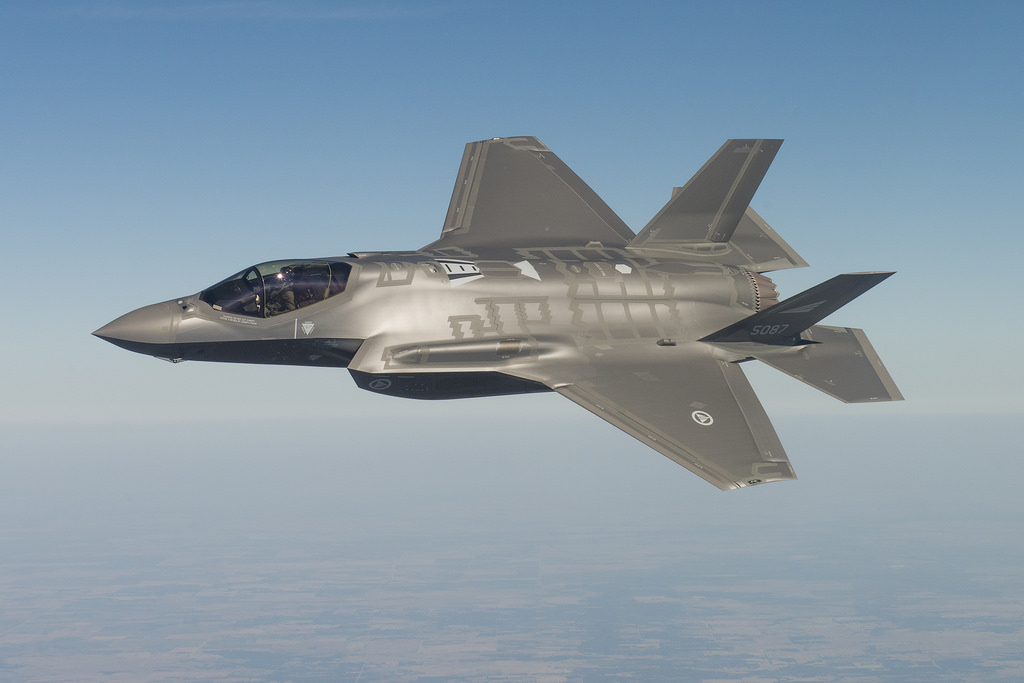
Lockheed Martin F-35
O Lockheed Martin F-35 "Lightning II" ou F-35 Joint Strike Fighter é um programa que visa a produção de três aeronaves stealth caça multi-função supersônicas

Velocidade máxima: 1.930 km/h
Autonomia de voo: 2.220 km
Introdução: 19 de fevereiro de 2006
Tipo de motor: Pratt & Whitney F135
Fabricante: Lockheed Martin Aeronautics
Primeiro voo em: 10 de dezembro de 2006

quarta-feira, 5 de abril de 2017

terça-feira, 4 de abril de 2017

Tupolev Tu-160 the world's heaviest bomber

Tupolev Tu-160 the world's heaviest bomber
With 275,000 kg (606,271 lb) gross weight, being 171,000 kg (376,990 lb) of fuel and 40,000 kg (88,184 lb) of military cargo. This huge Russian bomber needs a 2,200m runway to take off and a 1,600m runway to land, reaching a top speed of Mach 2.05 (2,220km / h)
Tu-160 being stocked in mid-air

Tu-160 before installing weapons

Tupolev Tu-160

Maximum speed: 2,220 km / h
Flight autonomy: 12,300 km
Length: 54 meters

We can say that the Tu-160 is the largest, heavy and fastest bomber to come into service in the world. Already the largest and fastest in history is with the XB-70 "Valkyrie with the Length of 58 meters with the maximum speed of mach 3 (3,309 km / h)

The only two prototypes produced


One of the prototypes was destroyed in 1966 after a collision in the air and the other one is exposed in the National Museum of the United States Air Force

I like to leave your comment about this.


Eurofighter Typhoon

Eurofighter Typhoon

Eurofighter Typhoon

The Eurofighter Typhoon is a European fighter and fighter aircraft developed by a joint program involving Alenia Aeronautica, BAE Systems and ADS, formerly EADS and the governments of the United Kingdom, Germany, Italy and Spain.

Maximum speed: 2,495 km / h
Developed by: British Aerospace EAP
Empty weight: 11,000 kg (24.3 lb)
Weight loaded: 16,000 kg (35.3 lb)
Weight max. Take-off: 23,500 kg (51,8 lb)
Ceiling height: 19.812 m (65.0 ft)
Machine guns / Cannons: 1 × Mauser MK 27 cannon (27 mm)

segunda-feira, 3 de abril de 2017

The F16 is a jet fighter made for the United States Air Force operating since 1979

The F16 is a jet fighter made for the United States Air Force operating since 1979. It reaches a top speed of 2160 kilometers per hour, that is, more than twice the speed of sound. The F16 has a range of 3,890 kilometers and can also be refueled in flight. This hunt is armed with air-to-air missiles and cannons and operates in all weather and light conditions.

F-16 Fighting Falcon

F-16 Fighting Falcon

Cockpit similar ao F-16 MLU
The F16 is a jet fighter made for the United States Air Force operating since 1979.

domingo, 2 de abril de 2017

After the MiG-25, no other new hunt went from 3,400 km / h

In the early 1970s, it was enough to pronounce the acronym "MiG-25" in front of NATO generals to cause them panic. There were rumors about the capabilities of a new Soviet fighter and they were simply out of the ordinary.
Mikoyan-Gurevich MiG-25


Designed by Mikoyan-Gurevich (MiG), the MiG-25 was considered a "pure" super-hunt, faster than any other aircraft then operational in the world at the time. The new aircraft was so frightening that the United States rushed to develop the F-15 Eagle, which was supposed to be the enemy capable of detaining "Foxbat" as it was called in NATO's name. common.

Mikoyan-Gurevich MiG-25 & F-15
The much-feared Soviet fighter was made almost entirely of steel, material that the designers of the West had stopped using on high-performance aircraft several years earlier. At the same time, American fighters were built with aluminum and titanium - more expensive.

Experts sent to Japan found that the MiG-25 could fly at 3,400 km / h, but could only maintain that speed for a few minutes. The two huge turbojets of the hunting, Tumanskii RD-31 models, were powerful (each generating 11 tons of thrust), but consumed so much fuel that the autonomy of the hunting was drastically compromised. The electronic part of the aircraft was also unwanted and in some respects was already completely obsolete: the radar still used thermionic valves, a technology of World War II, while American fighters were already entering the digital age.

sábado, 1 de abril de 2017

Panavia Tornado
Panavia Tornado

F-104 Starfighter
F-104 Starfighter


By examining the results of more than 500 test flights, the aircraft surpassed all expectations. According to the Voice of Russia site, tests continue on the prototypes of the fifth generation Russian fighter T-50 built by the Sukhoi aircraft company. By examining the results of more than 500 test flights, developers say the aircraft has exceeded all expectations. The T-50 test pilot, Serguei Bogdan, points out that the computerized systems and the "artificial intelligence" of the airplane ensure flight safety.
Sukhoi PAK FA

Sukhoi Su-47
Sukhoi Su-47

Postagem em destaque

SR-71 Blackbird